
Exterior painting does far more than improve the appearance of a property. The right preparation and coatings help protect walls, windows, fascias and other surfaces from rain, moisture and general weathering.
That is particularly important in Exeter, where properties can face plenty of wet and changeable weather throughout the year. From older homes around St Leonards and Heavitree to more modern properties in Pinhoe and Cranbrook, every exterior eventually needs maintenance.
Leaving worn or damaged paintwork for too long can allow moisture to reach the surface underneath. What begins as a few small cracks or patches of peeling paint can gradually turn into a much larger repair job.
How Often Should You Repaint a House Exterior?
There is no single timetable that suits every property. The lifespan of exterior paint depends on the surface, the previous preparation, the product used and how exposed the building is.
A sheltered wall may remain in good condition for years, while a south-west facing elevation can show wear much sooner. Timber window frames and fascia boards may also need attention before rendered or masonry walls.
The best approach is to inspect the exterior regularly rather than waiting until the paint has completely failed.
Common warning signs include:
- Flaking or peeling paint
- Hairline cracks in painted render
- Faded or patchy colour
- Bare timber beginning to show
- Blistering around windows and woodwork
- Green staining, algae or dirt on masonry
Catching these issues early usually makes the preparation more manageable and helps protect the surface beneath.
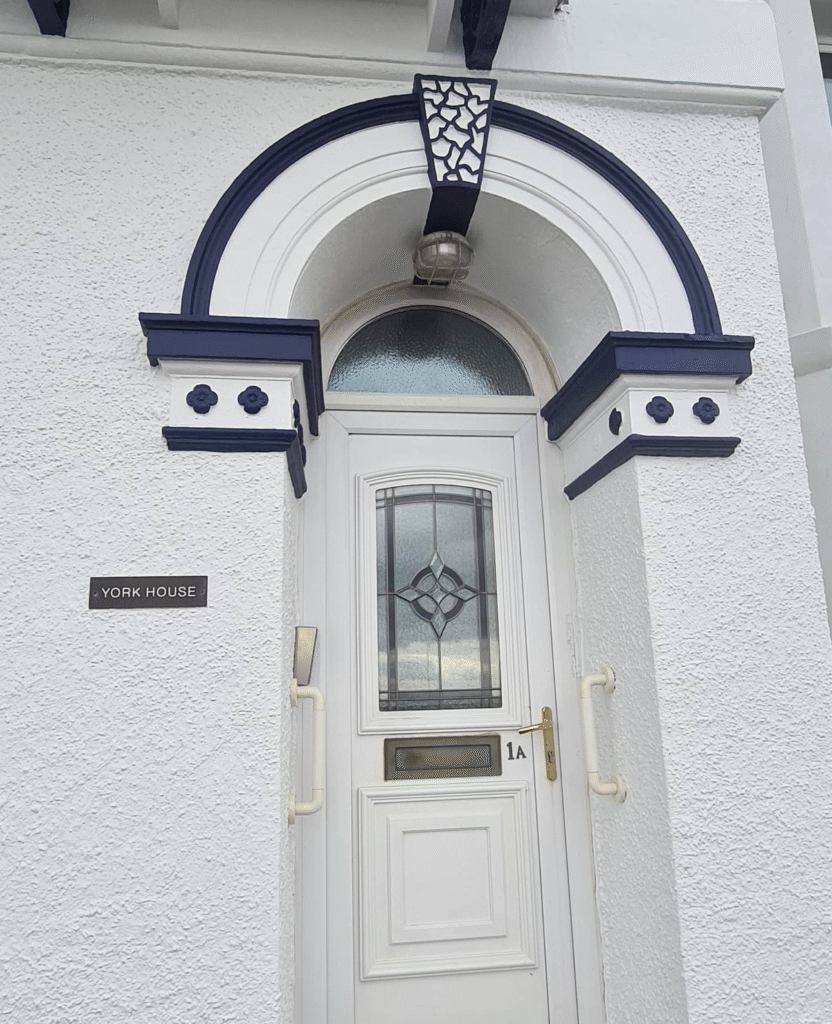
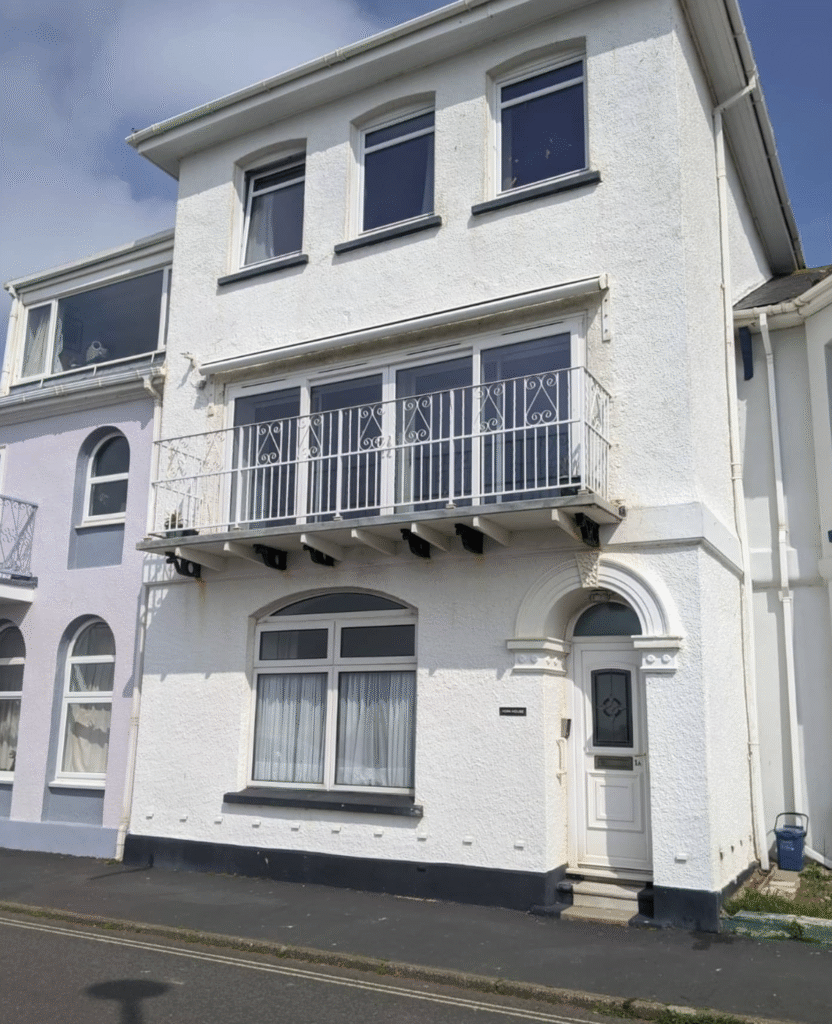
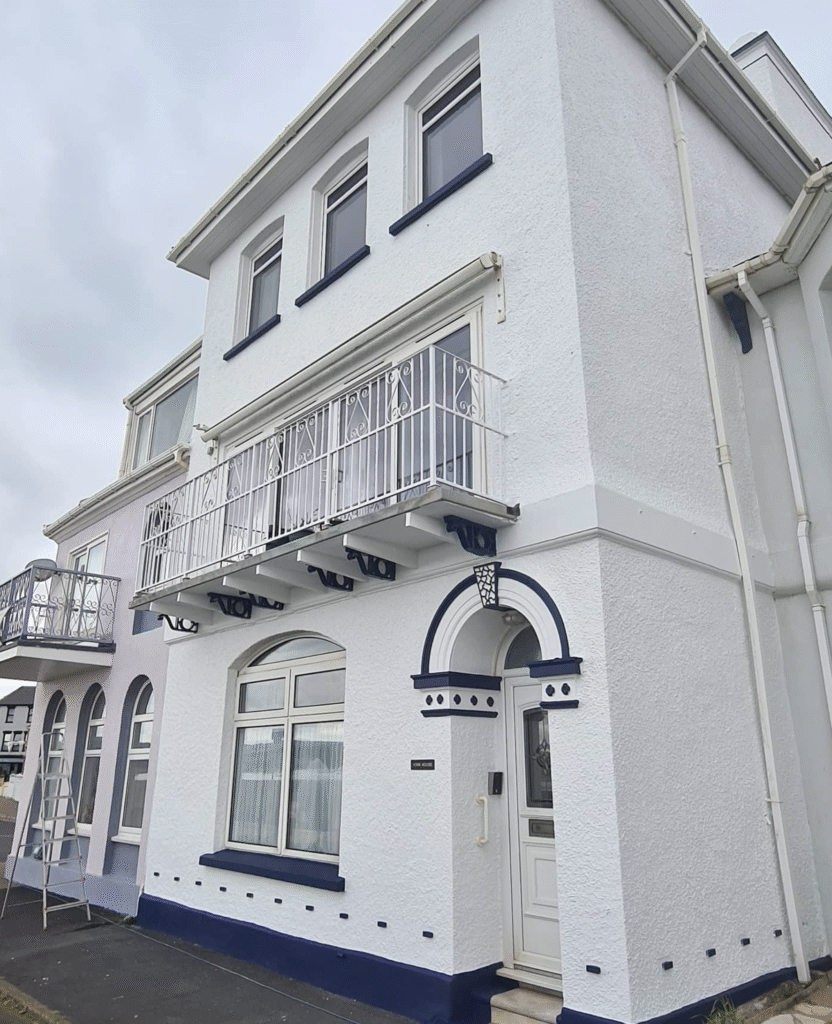
Exterior Masonry Painting
Painted render and masonry are common across Exeter. When they are well maintained, they help a property look clean and cared for while giving the exterior an extra layer of protection.
Before repainting, the walls need to be checked for loose material, cracks and areas where the existing coating has failed. Dirt and organic growth should also be removed so that the new paint can bond properly.
Simply painting over a damaged surface may improve its appearance briefly, but the underlying problems will soon show through again. Careful preparation is what gives exterior masonry paint the best chance of lasting.
The final product should also be suitable for outdoor use and compatible with the existing surface. Exterior paints are designed to deal with exposure in a way that ordinary interior emulsions are not.
Timber Windows, Fascias and Exterior Woodwork
Timber features often need more detailed preparation than masonry. Window frames, doors, soffits and fascia boards are exposed to moisture and temperature changes throughout the year.
Once the paint begins to crack or lift, water can reach the timber underneath. If left untreated, that can lead to swelling, softness and decay.
A professional exterior decorating process may include scraping away failed coatings, sanding the surface, filling minor defects and priming bare wood before applying the finishing coats.
This work can take time, but it is far better than covering over failing paintwork and hoping it holds.
Older properties close to Exeter city centre, the Quayside and areas such as St Thomas often feature traditional timber details that form an important part of the building’s character. Maintaining them properly helps preserve both their appearance and condition.
Choosing Colours for an Exeter Property
Exterior colour choice should work with the style of the building, its surroundings and any existing materials such as brick, stone or roof tiles.
Soft creams, warm whites and muted greys remain popular because they suit a wide range of properties. Stronger colours can work well on front doors and selected details, giving the home more character without overwhelming the overall exterior.
It is also worth thinking about neighbouring properties. A colour can look very different on a small sample compared with an entire elevation, especially in bright daylight.


Why Exterior Preparation Cannot Be Rushed
Exterior decorating is heavily dependent on preparation and suitable weather. Surfaces need to be sound, clean and dry before coatings are applied.
Rushing the job or painting during poor conditions can affect adhesion and lead to premature failure. Damp surfaces, loose paint and untreated cracks will all reduce the lifespan of the new finish.
Access also needs to be considered. Upper floors, gable ends and fascia boards may require specialist equipment so that the work can be completed safely and evenly.
A good exterior decorating quote should clearly explain what preparation is included, which surfaces will be painted and how many coats are planned.
The Best Time for Exterior Painting in Exeter
Exterior decorating is normally planned for the drier and milder parts of the year. That said, the weather in Devon can be unpredictable, so a professional decorator will keep a close eye on the forecast and avoid applying coatings when conditions are unsuitable.
Booking ahead is sensible, particularly for larger projects. Exterior decorating diaries can fill quickly once the weather begins to improve.
Planning early also gives you time to consider colours, discuss repairs and make sure the full scope of work is clear before the project begins.
Protecting Your Property for the Long Term
A freshly painted exterior improves kerb appeal, but the real value lies in protecting the building.
Properly maintained masonry, timber and exterior features are less likely to suffer from avoidable weather damage. Regular attention can also prevent small defects from becoming more expensive problems later.
Vivid Decor provides professional exterior painting and decorating across Exeter and surrounding areas. Every project is approached with careful preparation, suitable materials and close attention to the details that help the finish last.
For homeowners in Exeter, Heavitree, St Leonards, Pinhoe, Topsham and nearby areas, now is a good time to inspect exterior paintwork and begin planning any work needed for the drier months.

Do you need help from our experts?
Give us a call today to get expert advice and support from our experienced team.