
Bathroom Decorating: Choosing Paints and Finishes That Handle Moisture
Bathrooms are one of the trickiest rooms to decorate properly. They might be smaller than bedrooms or living rooms, but they deal with far more moisture, steam, cleaning and temperature changes.
That means bathroom decorating needs a more practical approach. It is not just about choosing a nice colour. The paint, preparation and finish all need to suit the way the room is used.
A well-decorated bathroom should feel fresh, clean and calm, but it also needs to hold up to daily showers, condensation and regular wiping down. If the wrong product is used or the preparation is rushed, the finish can start to peel, stain or look tired much sooner than expected.
Why Bathrooms Need the Right Paint
Standard wall paint is not always the best choice for bathrooms. These spaces are exposed to moisture far more often than most other rooms, especially where ventilation is limited.
Steam can soften poor coatings, condensation can sit on ceilings and walls, and regular cleaning can wear down weaker finishes. Over time, this can lead to peeling paint, patchy areas or marks that are difficult to remove.
Using a suitable bathroom paint or durable moisture-resistant finish helps the room stay looking better for longer. It also makes cleaning easier and gives the surface a better chance of coping with everyday use.
Bathrooms are also one of the rooms where damp and mould issues can appear if moisture is not managed properly. For wider guidance on this, homeowners can read the government guidance on damp and mould.
Preparation Comes First
Good bathroom decorating starts before any paint is applied.
The existing surfaces need to be checked carefully. Flaking paint, stains, old filler marks, cracks or signs of moisture should all be dealt with properly before fresh coats go on. If these problems are simply painted over, they are likely to show through again.
Ceilings often need extra attention because steam rises and collects there. Window boards, skirting, door frames and other woodwork can also suffer if the finish has started to break down.
Proper preparation may include sanding, filling, stain blocking, priming and making sure the surface is clean, dry and sound. It is not the most exciting part of the job, but it is what gives the finished room a sharper and longer-lasting result.
For homeowners planning a wider refresh, residential interior painting and decorating can cover bathrooms alongside bedrooms, hallways, kitchens, living areas and other rooms that need a clean, professional finish.
Choosing the Best Finish for the Room
The right finish depends on the bathroom itself.
A busy family bathroom will usually need something more durable than a lightly used guest en-suite. A compact bathroom with limited ventilation may need a more practical finish than a larger room with good airflow and natural light.
Many modern bathroom paints are designed to resist moisture while still giving a smooth, attractive finish. Some are wipeable, some are mould-resistant and some are made specifically for humid rooms.
The main thing is to match the product to the space. A finish that looks great in a bedroom may not perform well in a bathroom. Choosing properly at the start helps avoid problems later.
Bathroom Colour Ideas
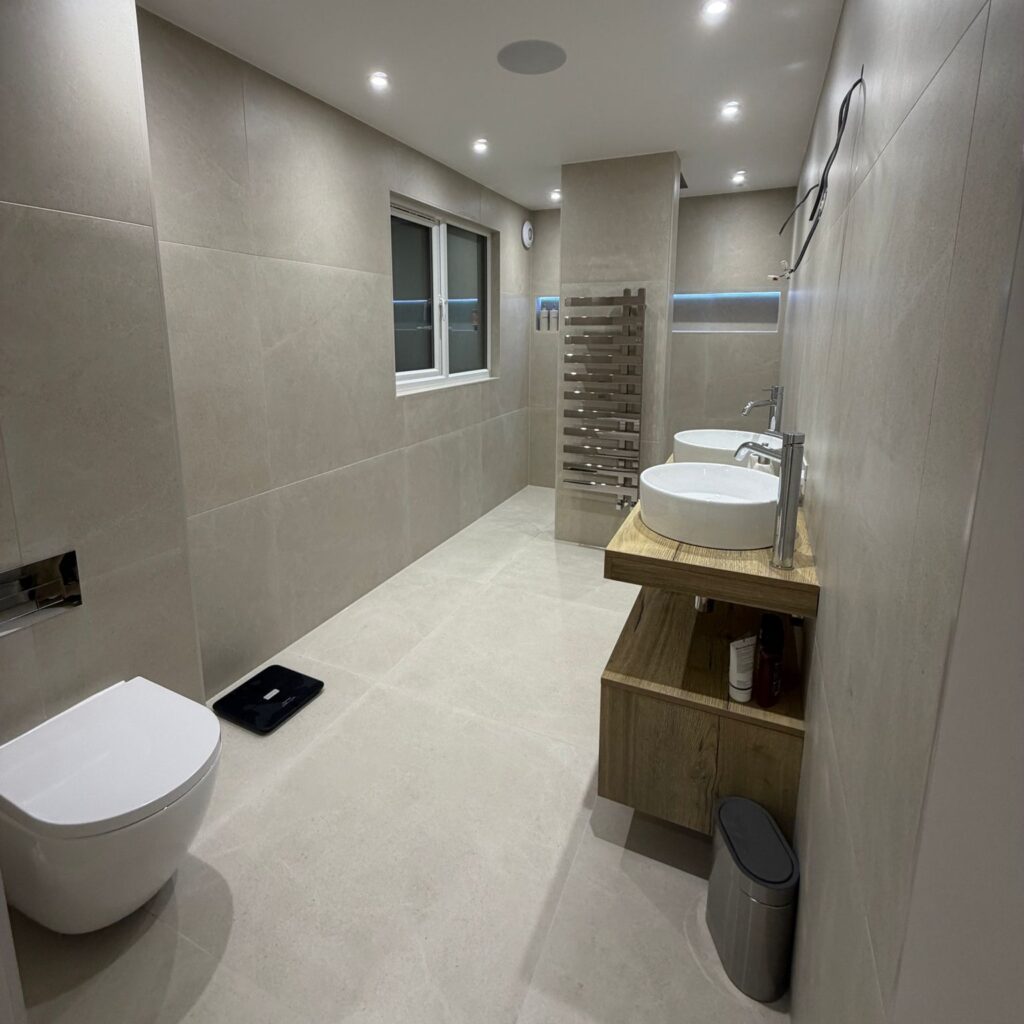
Bathrooms do not have to be plain white. While white can look clean and bright, softer neutrals, warm greys, muted greens, off-whites and earthy tones can all work beautifully.
Lighter shades can make a small bathroom feel more open. Warmer tones can stop the space feeling cold. Deeper colours can work well in cloakrooms or en-suites where a more dramatic look is wanted.
Lighting makes a big difference too. Bathroom colours can look very different under spotlights compared with natural daylight, so testing colours before committing is always worthwhile.
The best bathroom colour schemes feel calm, clean and easy to live with.
Feature Walls and Decorative Finishes
A bathroom can be a great place to add a bit of character, especially if the rest of the design is simple.
A feature wall behind a vanity unit, mirror or freestanding bath can make the room feel more considered without overwhelming the space. It can also help break up plain walls and add a more designed feel.
For a more premium finish, specialist options such as Venetian plastering can add depth, movement and texture when used in the right setting and sealed correctly.
The key is choosing a finish that suits the room. Bathrooms need materials that can cope with moisture, so decorative choices should always be planned carefully.
Don’t Forget the Woodwork
Woodwork can make or break the final look of a bathroom.
Freshly painted skirting boards, door frames, window boards and storage details help the room feel cleaner and more finished. These areas often take knocks, absorb moisture and get wiped down regularly, so they need proper preparation and suitable coatings.
A sharp finish on the woodwork can make even a simple bathroom repaint feel much more polished.
Ventilation Still Matters
Even the best bathroom paint needs the room to be looked after properly.
Good ventilation helps reduce condensation and keeps surfaces in better condition. Extractor fans, open windows where possible and regular airflow all help paintwork last longer.
Decorating can improve the appearance and durability of the room, but it should work alongside good ventilation and general maintenance.
A Better Bathroom Finish Starts with the Right Approach
Bathroom decorating is not about rushing through a small room. It is about choosing the right products, preparing the surfaces properly and applying the finish with care.
Done well, it can make the bathroom feel brighter, cleaner and more relaxing. Done badly, the problems often show quickly.
Whether the goal is a simple refresh, a calmer colour scheme, a feature wall or a more specialist finish, the right decorating approach makes a huge difference.
Do you need help from our experts?
Give us a call today to get expert advice and support from our experienced team.