
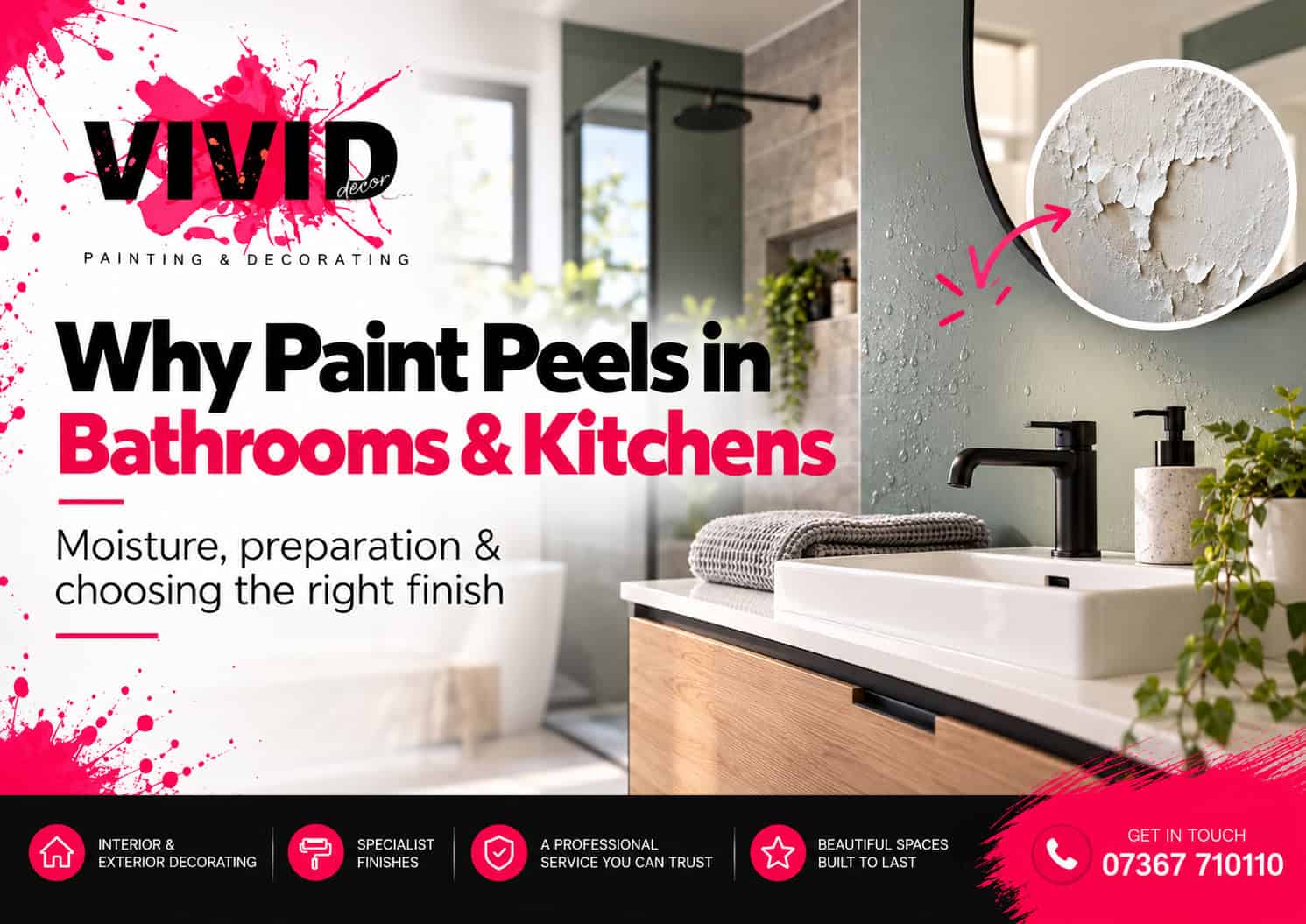
Peeling paint is a common problem in bathrooms and kitchens, and it can be frustrating when a freshly decorated room starts showing signs of damage after only a short time.
Unlike bedrooms and living rooms, these spaces are regularly exposed to steam, condensation, changing temperatures and frequent cleaning. If the surfaces haven’t been prepared correctly or the wrong paint has been used, the finish can begin to blister, crack or peel away.
Understanding why this happens is important because simply painting over the damaged area rarely provides a lasting solution.
How Moisture Causes Paint to Peel
Moisture is one of the biggest reasons paint fails in bathrooms and kitchens.
Every hot shower, bath or cooking session releases moisture into the air. When that warm air meets colder surfaces, condensation can form on walls and ceilings.
Over time, repeated exposure to moisture can weaken the bond between the paint and the surface underneath, particularly when the existing coating is unsuitable or already damaged.
Bathroom ceilings are particularly vulnerable because warm, moist air rises. Paint may begin to bubble above the shower or peel around corners where condensation regularly collects.
Kitchens face similar problems, although grease, food residue and regular cleaning can create additional difficulties.
If paint repeatedly peels in the same area, it is worth investigating the source of the moisture rather than simply repainting.
Poor Preparation Can Cause Paint to Fail
Even expensive paint can fail when applied to a poorly prepared surface.
Before decorating a bathroom or kitchen, the walls and ceilings need to be clean, dry and free from anything that could affect adhesion.
Common preparation problems include painting over loose coatings, leaving grease or soap residue on walls, failing to remove sanding dust and applying paint before the surface has dried.
Previously painted glossy surfaces can also cause problems if they have not been prepared to accept a new coating.
A professional decorating job may involve removing loose paint, cleaning the surface, sanding rough edges, filling imperfections and applying a suitable primer before the finishing coats.
These steps take time, but they are essential for creating a sound foundation.
For more information about the importance of surface preparation, see our guide on why preparation matters in professional decorating.
Why Kitchen Paint Sometimes Peels Near Cooking Areas
While moisture is a major issue in kitchens, grease is another common reason paintwork fails.
Cooking oils and airborne grease can settle on walls, ceilings and surfaces around hobs. This can leave a thin layer of contamination that prevents fresh paint from bonding properly.
Painting directly over these areas without thorough cleaning can result in peeling or patchy coverage.
Before redecorating, affected surfaces should be cleaned with an appropriate degreasing product, rinsed where required and allowed to dry completely.
The area around the cooker may also benefit from a more durable, washable finish designed to handle regular cleaning.
Where surfaces receive frequent direct splashes or intense heat, tiles, splashbacks or other suitable materials may provide better protection than ordinary decorative paint.
Choosing the Right Paint Finish
Not every interior paint is suitable for bathrooms and kitchens.
Standard matt emulsion may be appropriate for many living spaces, but areas exposed to humidity and frequent cleaning often benefit from specialist coatings.
Modern kitchen and bathroom paints are available in several finishes, including durable matt, eggshell and satin.
Durable matt can provide a contemporary, low-sheen appearance while offering improved resistance to cleaning and everyday wear. However, the chosen product must be specifically suitable for humid conditions.
Eggshell and satin finishes generally offer a little more sheen and can provide washable, hard-wearing surfaces. They can be particularly useful on woodwork, doors and areas that need regular wiping down.
Specialist bathroom paints are formulated for moisture-prone environments, with some products offering additional resistance to mould growth.
The best choice depends on ventilation, surface condition and how the room is used. Even a moisture-resistant coating cannot compensate for an ongoing leak or serious condensation problem.
How to Repair Peeling Paint Properly
When paint has already started peeling, the first step is identifying why it happened.
If condensation, poor ventilation or water ingress is responsible, that issue needs to be addressed before redecorating.
Once the underlying problem has been resolved, a typical repair involves:
- Removing loose and flaking paint until a sound surface is reached.
- Cleaning away grease, residue and other contamination.
- Allowing the surface to dry thoroughly.
- Sanding and filling damaged areas where necessary.
- Applying a suitable primer or sealer if required.
- Finishing with paint designed for the room’s conditions.
Following the manufacturer’s drying and curing instructions is also important. Fresh paint may feel dry to the touch before it has developed its full resistance to moisture and cleaning.
Where extensive dampness, mould or water damage is present, specialist investigation or remedial work may be needed before decorating can begin.
Good Ventilation Helps Protect Your Decorating
Choosing the correct paint is only part of preventing future problems.
Bathrooms and kitchens need effective ventilation to remove excess moisture. Extractor fans, suitable ventilation systems and properly maintained air vents can help reduce condensation.
The UK government’s guidance on damp and mould in the home explains why addressing underlying moisture problems and maintaining adequate ventilation are so important.
If condensation continues to build up after every shower or cooking session, the ventilation may need attention.
Persistent mould, damp patches or repeated paint failure should not simply be covered with another coat of paint.
Professional Decorating Makes a Difference
Bathrooms and kitchens may not always be the largest rooms in a property, but they can be among the most demanding to decorate.
The combination of moisture, frequent cleaning and temperature changes means product selection and preparation need particular care.
At Vivid Decor, our residential interior painting and decorating services include kitchens, bathrooms, ceilings, woodwork and other areas requiring careful preparation and durable finishes.
Whether you are repairing peeling paint or planning a complete room refresh, choosing the right approach from the beginning can help avoid repeat problems and achieve a cleaner, longer-lasting result.
Do you need help from our experts?
Give us a call today to get expert advice and support from our experienced team.